
- Monday: 09:00-17:00
- Tuesday: 09:00-17:00
- Wednesday: 09:00-17:00
- Thursday: 09:00-17:00
- Friday: 09:00-17:00
- Saturday: Closed
- Sunday: Closed
Many people are surprised to learn that flat roofs aren’t completely flat. They have a slight slope, clever detailing, and an entire drainage system built into their design. These features are essential because without proper drainage, water would sit on the surface and cause leaks, cracks, or long-term structural problems. That’s why homeowners often ask: How Does Drainage Work on a Flat Roof? Understanding the basics helps you spot potential issues early and keep your roof performing at its best.
In this guide, we break down How Does Drainage Work on a Flat Roof? and explain the methods roofing contractors use to move rainwater safely away from your property.
The Importance of Proper Drainage
Even small amounts of standing water can damage roofing materials. Over time, pooled water adds weight, encourages algae growth, and increases the risk of leaks. Good drainage protects the roof structure and improves its lifespan, especially if you have flat roofs in Doncaster, where weather conditions can be unpredictable.
Flat Roofs Aren’t Completely Flat
Despite the name, a flat roof has a slight gradient built into it. This is known as the “fall,” usually around 1:40. The gradient is enough to keep water moving across the surface but still create the appearance of a flat roof.
The fall can be created using:
- Tapered insulation boards
- Carefully shaped timber structures
- Specialist roofing systems
This built-in slope prevents water from settling in the middle of the roof, which is a common issue on older or poorly maintained roofs.
Roof Outlets and Drains
One of the simplest drainage methods is installing roof outlets. These are openings connected to pipes that carry water away from the roof. They act much like plugholes in a bathroom but are designed to handle large volumes of rainwater.
There are two main types:
Internal Drains
These sit within the roof’s structure and connect to internal pipework. They protect the exterior appearance of the building and work well for larger roofs.
External Downpipes
Some flat roofs channel water towards the edges where it flows into gutters and downpipes. This system is easier to maintain and works well for small to medium-sized roofs.
Drainage Through Scuppers
Scuppers are openings fitted into the edge of a flat roof. They act as exit points that allow water to flow off the roof into downpipes or directly into a drainage area. Scuppers are useful when a roof cannot support internal drains or when the design restricts pipework.
They’re particularly effective in heavy downpours because they allow water to exit quickly, reducing the chance of pooling.
Guttering for Flat Roofs
The guttering system on a flat roof works differently from pitched roofs. Because water doesn’t naturally run off as quickly, gutters need to be sized correctly and installed at the correct height. A deep gutter is often used to handle sudden rainfall.
Flat roof guttering must be checked regularly because leaves, moss, and debris can block the flow, causing water to back up onto the roof surface.
Why Some Flat Roofs Develop Drainage Problems
Several factors can affect drainage over time:
1. Sagging or Subsidence
Older roofs may sag in the middle, creating low spots where water collects.
2. Blocked Outlets
Leaves, moss, and dirt can clog drains or gutters.
3. Poor Installation
Incorrect slopes or badly fitted outlets cause problems from day one.
4. Structural Movement
Timber movement or settlement can change the original pitch of the roof.
5. Weather Damage
Heavy snow or repeated freeze-thaw cycles can weaken the roof surface.
Spotting these issues early can prevent more expensive roof repairs or replacements later on.
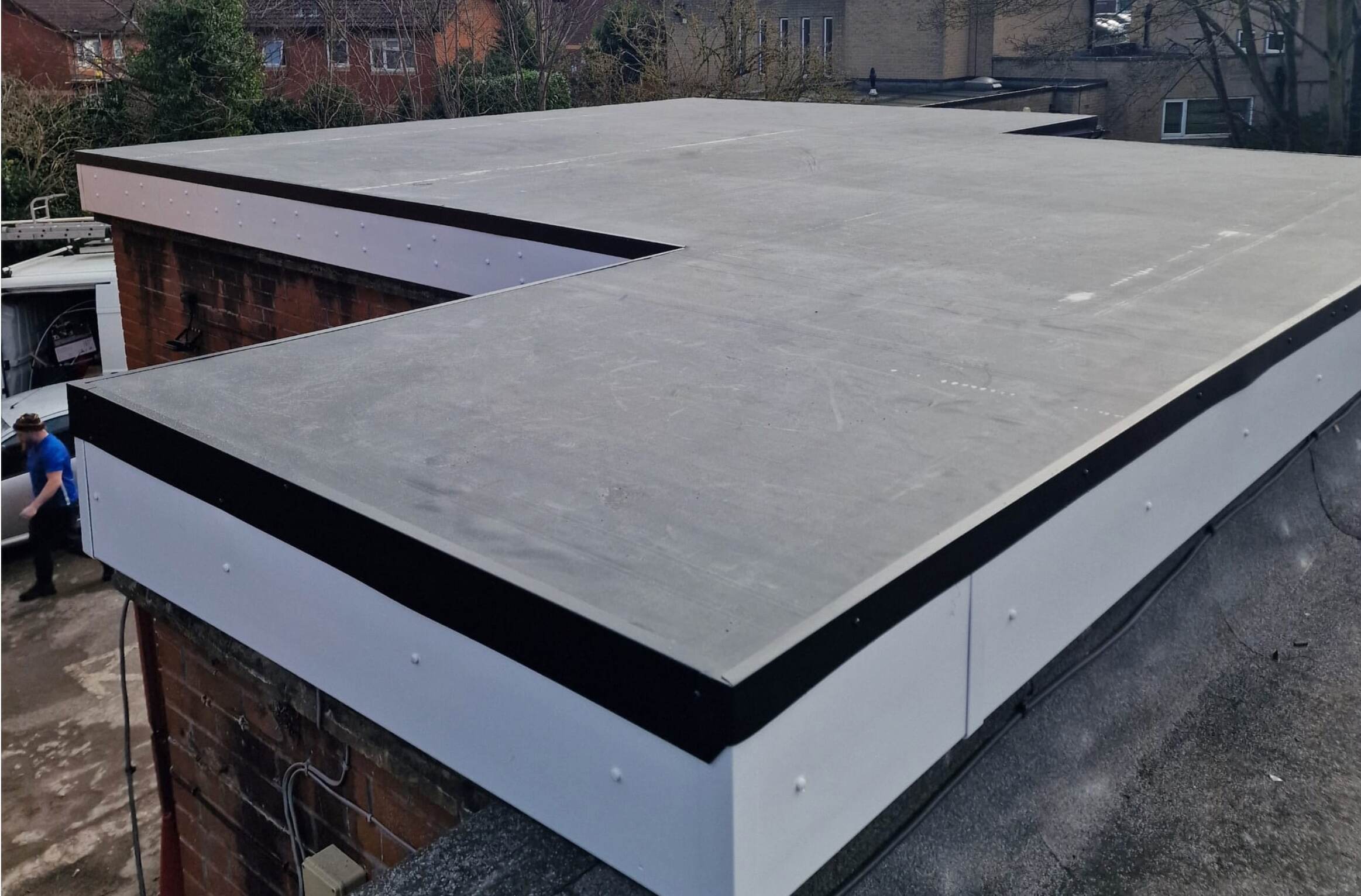 How to Keep Flat Roof Drainage Working Properly
Proper maintenance helps extend the life of your roof and avoids water-related damage. A few simple steps include:
- Clearing gutters and outlets at least twice a year
- Checking for ponding water after heavy rain
- Looking for early signs of cracking or blistering
- Keeping nearby trees trimmed to reduce leaf fall
- Booking periodic roof inspections by a professional roofer
Routine checks can help you avoid winter leaks and sudden issues during bad weather.
Final Thoughts
So, How Does Drainage Work on a Flat Roof? It relies on a combination of careful design, built-in slopes, drainage outlets, gutters, and regular maintenance. Even though flat roofs look simple, the drainage system behind them is surprisingly effective when installed correctly. Whether your property uses internal drains, scuppers, or edge guttering, the key is keeping everything clear, maintained, and functioning as intended.
Contact Us
If you need help with flat roof drainage, repairs, or a new installation, the Turner Roofing team are here to help. Get in touch today for friendly advice or a no-obligation quote.